
Research
We develop engineering, electrochemical, and spectroscopic approaches to treat and remove contaminated water and waste streams, and to understand the chemistry that governs how contaminants move through natural and engineered systems. We develop novel types of electrochemical and advanced reduction reactors to treat highly complex wastewater, treatment media, and other solids, and to recover valuable elements and reagents from contaminated streams.
Current Projects
Removal of arsenic and co-occurring contaminants from landfill leachate and landfill gas condensate
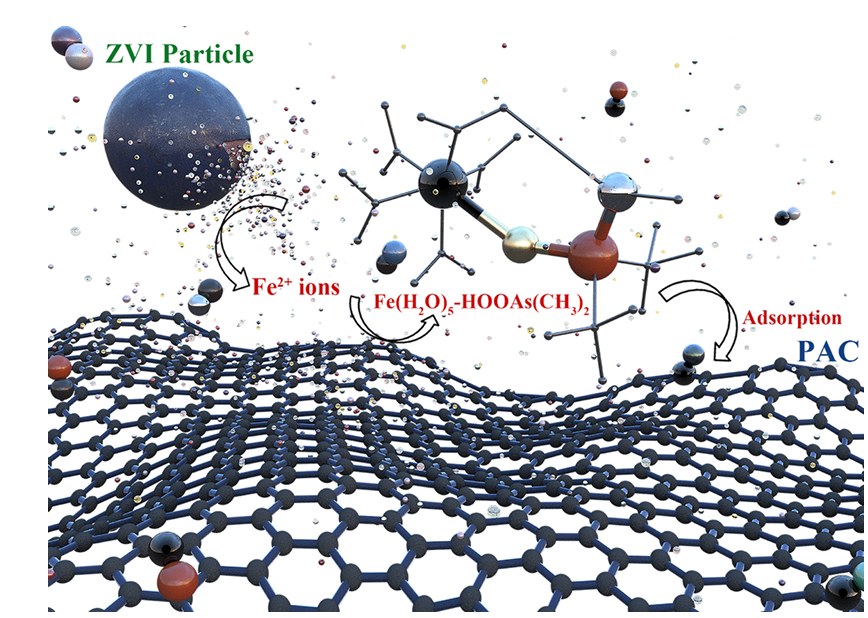
Landfill leachate and gas condensate carry arsenic together with a suite of co-occurring contaminants that conventional treatment removes poorly. We develop and test treatment trains — notably microelectrolysis and electrochemical reduction — that capture arsenic and its companions, and we resolve the mechanisms controlling their removal so the processes can be scaled and operated reliably.
Led by Annapaola Panico and Lucas Munson
Related work: Speciation of arsenic in landfill gas condensate (XANES/EXAFS) · Electrochemical treatment of landfill leachates · Removal of dimethylarsinic acid in the Fe/C system · Talk at ACS Fall 2026
Cycling of arsenic and antimony in renewable natural gas operations
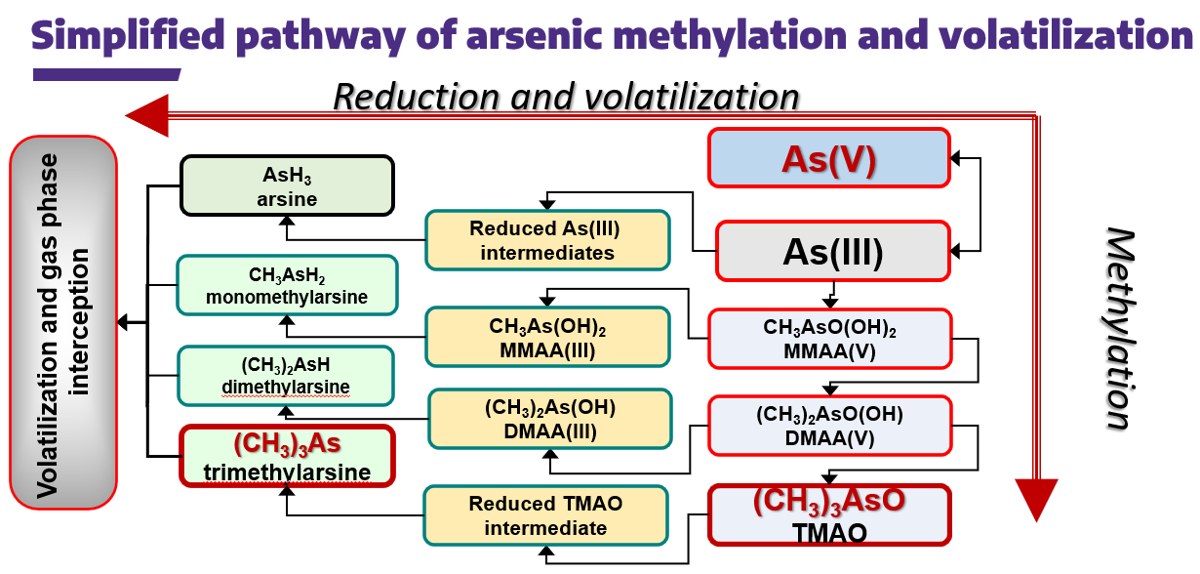
Recovering renewable natural gas from landfills mobilizes arsenic and antimony through a series of transformations that remain poorly understood. Using X-ray absorption spectroscopy (XANES/EXAFS), quantum-chemical modeling, and targeted experiments, we map how these elements partition between gas, condensate, and solid phases — with particular attention to the role of sulfur in organometallic cycling — to identify where they can be intercepted.
Led by Yage Li and Po-An Chen
Related work: Speciation of arsenic in landfill gas condensate (XANES/EXAFS) · Biological desulfurization of biogas · Poster at ACS Fall 2026
Effects of rising seawater levels on the integrity of subsurface infrastructure
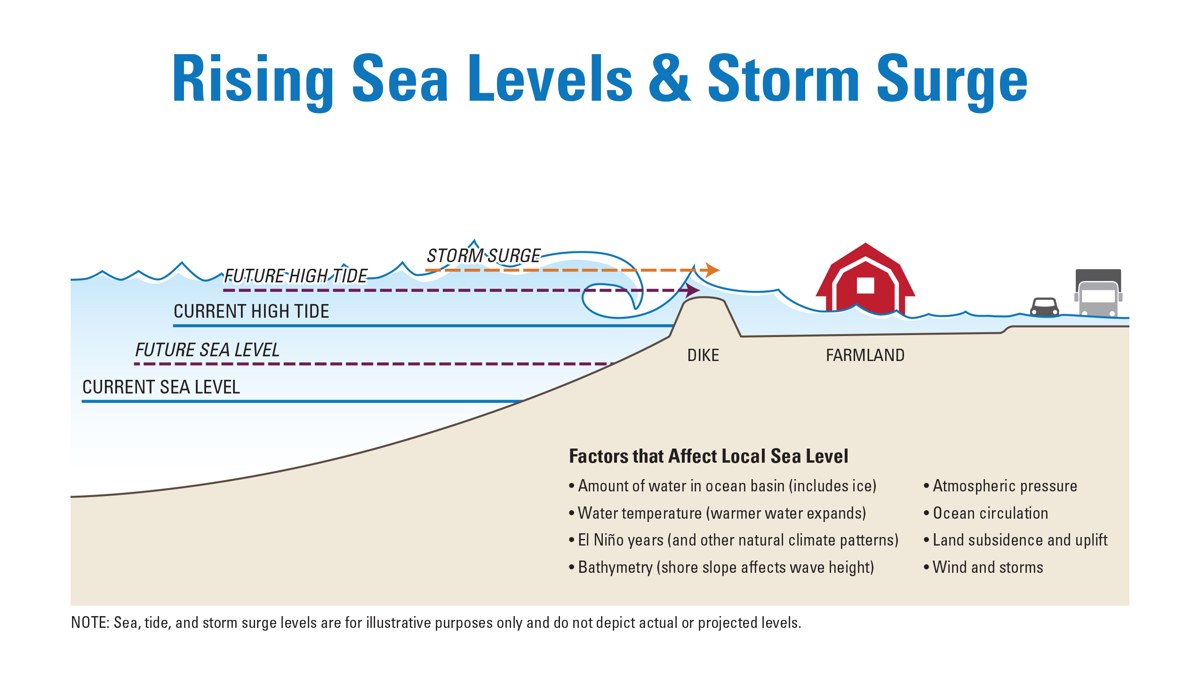
Rising sea levels are driving saline water into the soils and groundwater surrounding buried pipes, foundations, and other subsurface infrastructure. We examine how these shifting geochemical conditions affect corrosion and material integrity, and what they imply for the long-term resilience of coastal infrastructure.
Led by Lauren Koonce